
Make Scope 3 defensible at global scale
One auditable source of truth for Scope 3 Category 4 and 9 emissions across owned, chartered and third-party logistics. Built on 1.7T+ validated data points, aligned to GHG Protocol and CSRD.
Proven impact across global fleets
13,400+
2.7M+
1.7T+









Total value chain visibility
For most maritime operators, Scope 3, covering upstream (Category 4) and downstream (Category 9) transportation, represents the majority of carbon exposure. Chartered vessels, third-party logistics and supply-chain shipping stay opaque in most disclosures. ZeroNorth makes them visible, verified and defensible.
Reporting built for every regulatory regime
Meet EU MRV, IMO DCS, EU ETS, CSRD and Sea Cargo Charter requirements with structured, voyage-level reporting aligned to global standards. Generate unified outputs across time and voyage charter fleets, replacing reactive year-end disclosure with continuous, audit-ready compliance.
Find out more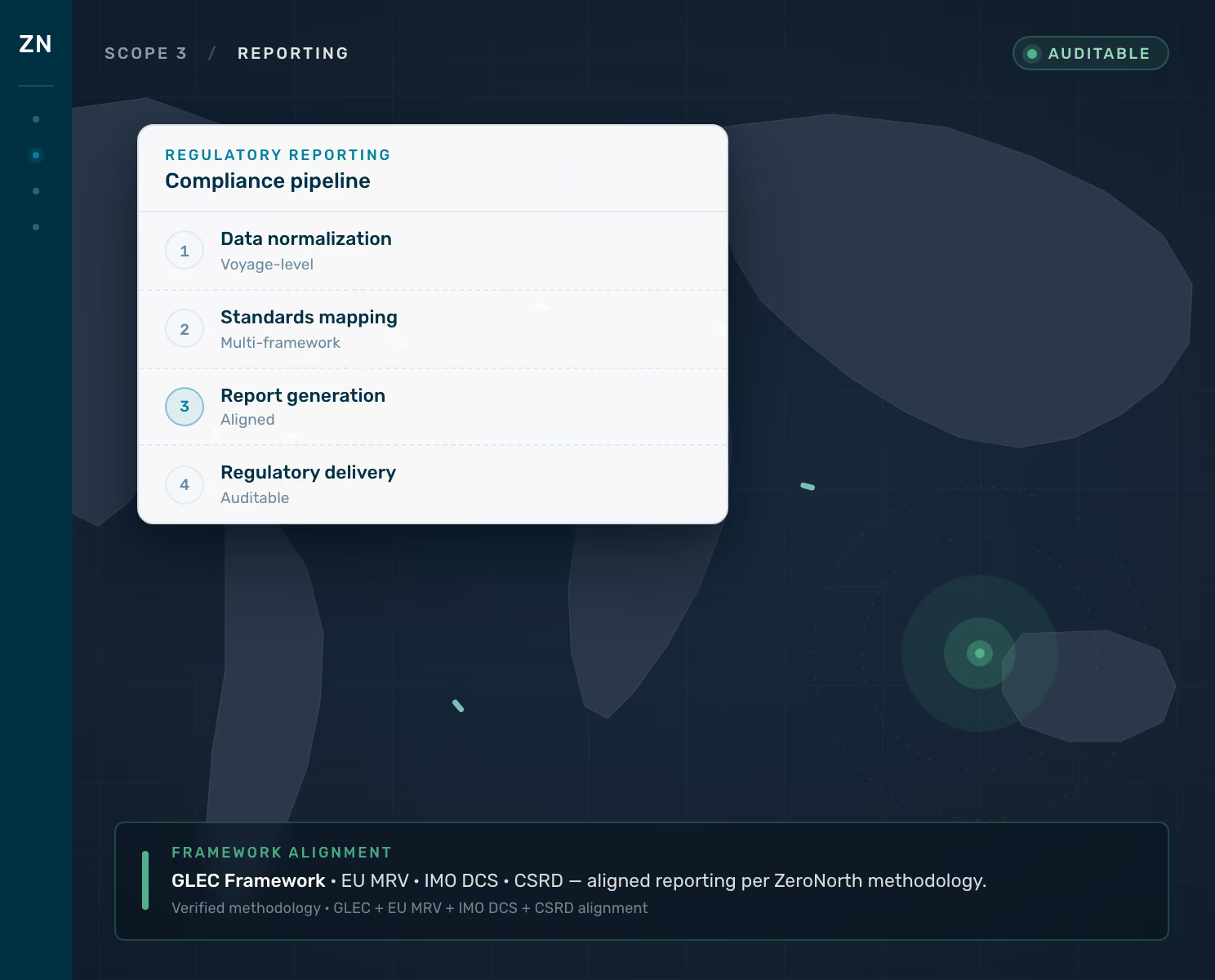
.avif)
Emissions you
can defend
Replace averages and fragmented inputs with high-fidelity modelling powered by 1.7+ trillion data points, AIS-derived activity and proprietary fuel intelligence. Integrated validation and data health scoring ensure every disclosure is structured, verified and ready for review.
Find out moreCarbon costs you can quantify
Link Scope 3 emissions directly to EU ETS exposure and chartering decisions. Carbon data becomes a financial signal, not a reporting afterthought.
Find out more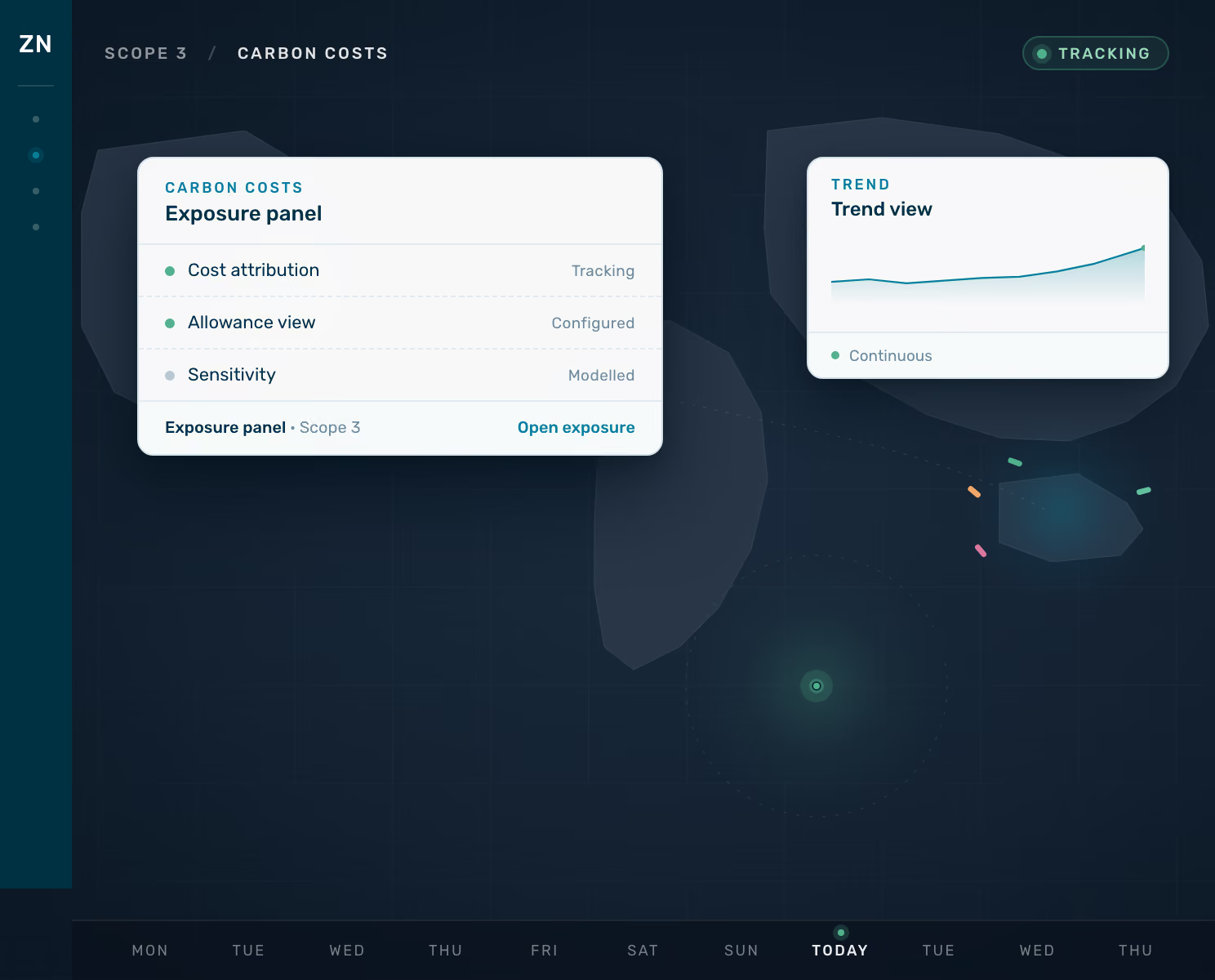
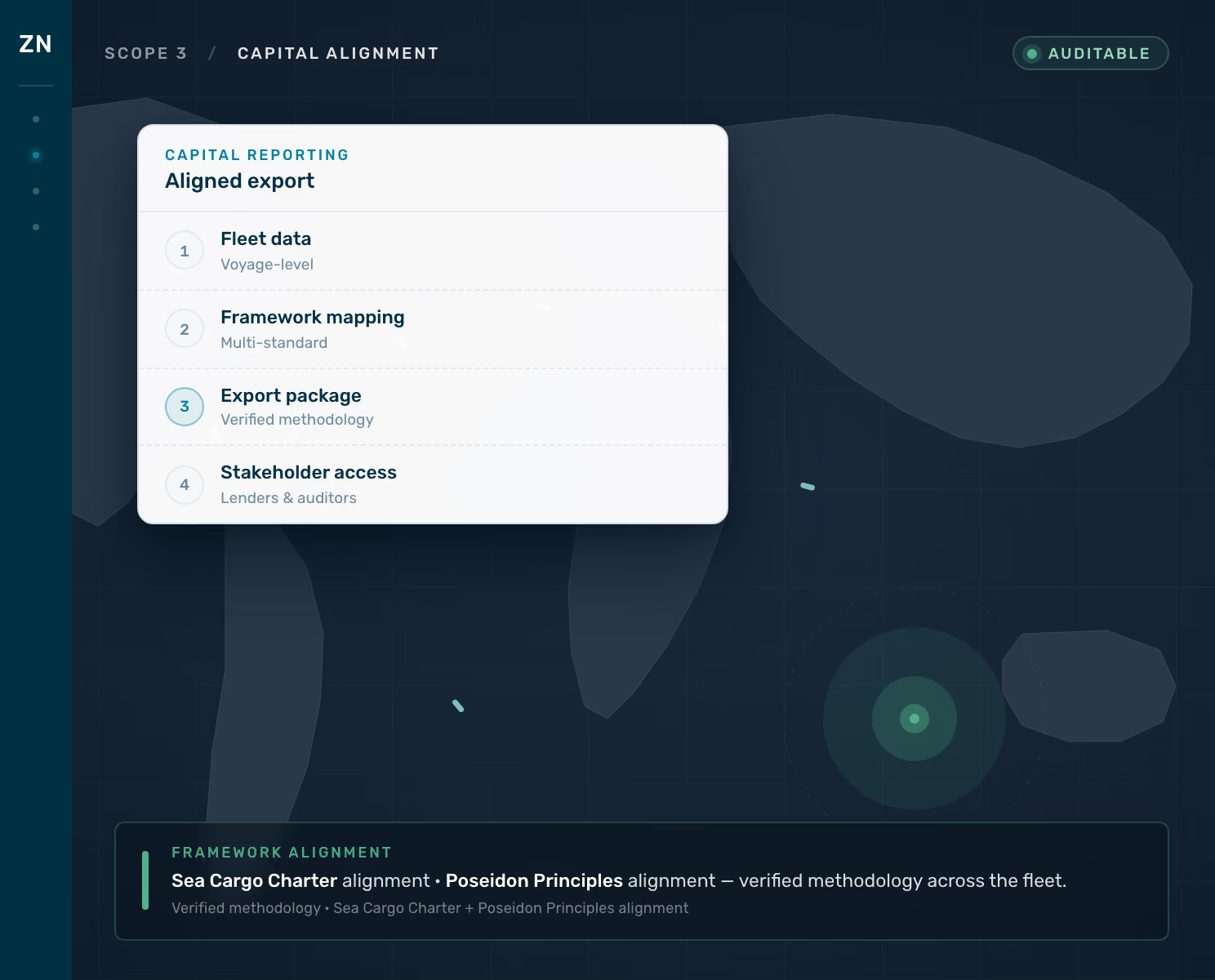
Capital aligned with credibility
Strengthen Sea Cargo Charter alignment and sustainability-linked financing with fleet dashboards and pre-filled reporting exports backed by verified methodology and transparent calculations.
Find out moreIntelligence beyond compliance
Calculate emissions for any vessel globally, including vessels outside your managed fleet. The Charter Emissions API delivers YTD CII, AER and EEOI across the merchant fleet, enabling pre-fixture evaluation, benchmarking and full value chain visibility.
Find out more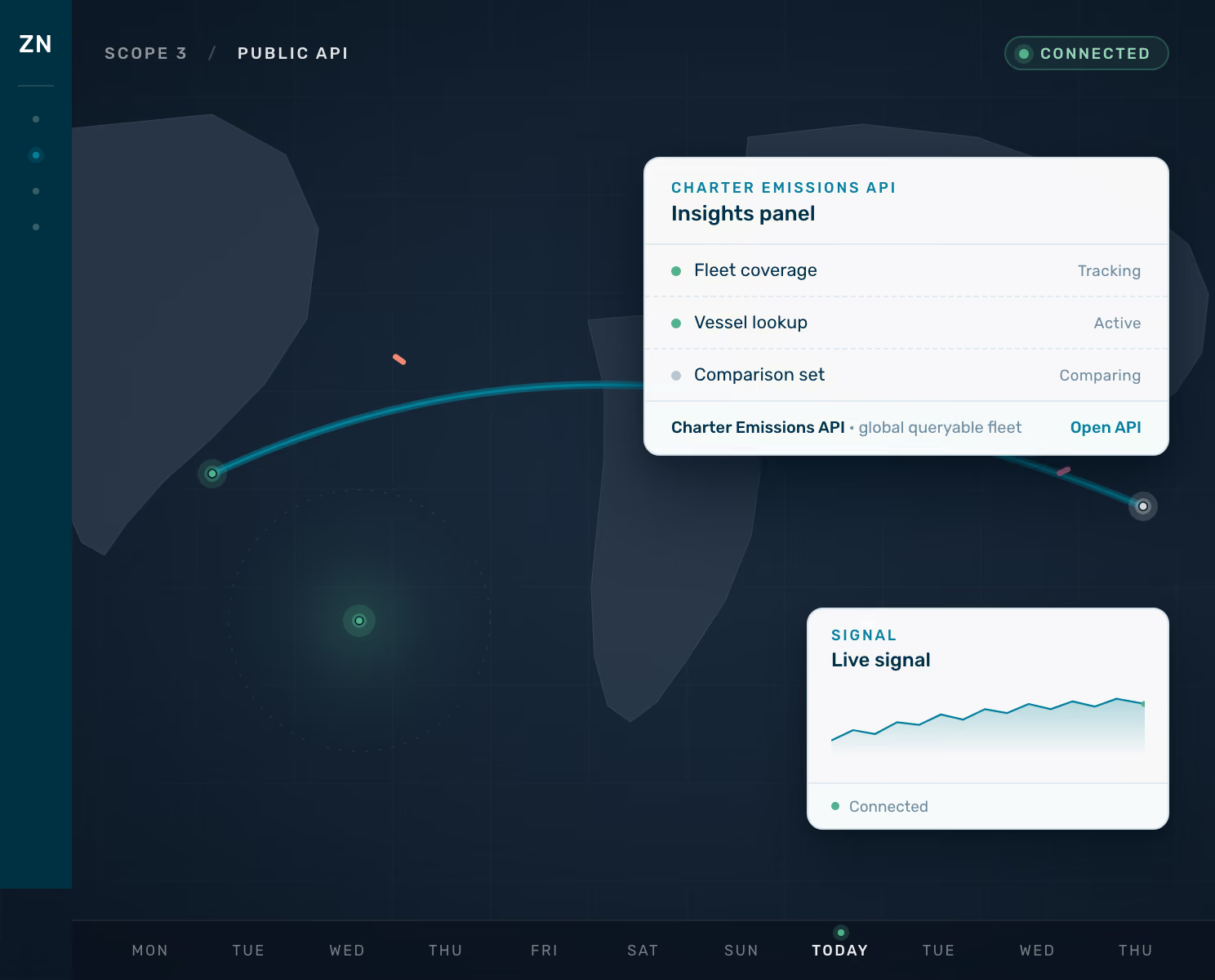
How Scope 3 Reporting works
Scope 3 Reporting gives cargo owners and financiers one auditable source of truth for Category 4 and 9 emissions, across owned, chartered and third-party logistics.

Category 4 and 9 coverage
Emissions from upstream transportation and downstream logistics, calculated per voyage rather than estimated by industry average.

Validated chartered-fleet data
The Charter Emissions API pulls emissions directly from chartered voyages, so reporting isn't blocked by tonnage you don't own.
.svg)
Aligned to GHG Protocol and CSRD
Outputs map to the standards regulators, financiers and rating agencies are actually using. No reformatting needed.

Auditable on demand
Every figure is traceable to its source vessel and voyage. Auditors and rating agencies see the evidence, not just the total.
The ZeroNorth advantage
Intelligence built for real maritime operations at scale.
.svg)
1.7T data points
Scope 3 disclosures are built on structured voyage reporting, AIS-derived activity and proprietary fuel modelling, not generic averages. Integrated validation workflows and data health controls ensure every output is traceable, auditable and aligned with regulatory standards.

API-powered market visibility
The Charter Emissions API extends emissions intelligence beyond your managed fleet. Access verified CII, AER and EEOI metrics across the global merchant fleet, embedded directly into chartering, procurement and risk workflows.

One connected platform
Scope 3 Reporting integrates natively with Vessel Reporting and Emission Analytics. No manual reconciliation. No fragmented data. Compliance, commercial and sustainability teams operate from a single, verified foundation.
A 30-minute walkthrough of the platform
See how ZeroNorth helps optimise voyages, reduce emissions, and improve operational performance in real time.
In case you missed anything.
Explore a curated collection of guides, tools, and insights designed to help you get the most out of our products and services.
Which reporting mandates does ZeroNorth Scope 3 Reporting cover?
ZeroNorth generates structured outputs for all major Scope 3 and emissions reporting regimes: EU MRV, IMO DCS, EU ETS, CSRD, Sea Cargo Charter, and GHG Protocol Categories 4 (Upstream Transportation) and 9 (Downstream Transportation). Output formats are accepted by regulators and third-party auditors, with no manual reformatting per submission.
What is included in maritime Scope 3 reporting?
Scope 3 covers indirect emissions across your value chain, primarily chartered vessels, upstream fuel production and outsourced logistics. For most operators, it represents the majority of total emissions exposure.
Which Scope 3 categories apply to shipping?
Maritime emissions typically fall under Category 4 (Upstream Transportation) and Category 9 (Downstream Transportation). ZeroNorth automatically structures reporting in alignment with CSRD, Sea Cargo Charter and GHG Protocol standards.
How are emissions calculated for vessels we don't own?
ZeroNorth combines AIS tracking, proprietary fuel modelling and 1.7+ trillion data points to predict fuel consumption and emissions for any vessel, without relying on generic averages.
How is data accuracy ensured?
The Data Health Score validates incoming data through 200+ automated checks, running continuously rather than only at year-end. Inconsistencies are cleansed in real time before they propagate into regulatory submissions, reducing exposure to EU ETS penalties, failed CSRD assurance and audit challenges.
Why is Scope 3 critical beyond 2026?
EU ETS expansion and CSRD assurance requirements increase scrutiny on emissions disclosures. Verified Scope 3 reporting protects capital access and long-term competitiveness.
Does ZeroNorth Scope 3 Reporting align with CSRD, GHG Protocol and Sea Cargo Charter?
Yes. CSRD assurance requirements are addressed through continuous data validation and audit-ready output. GHG Protocol categorisation is applied automatically to upstream and downstream transportation emissions. Sea Cargo Charter reporting is supported with the operational data inputs required for compliant voyage-level calculations.
How accurate are CII forecasts?
Forecasts are based on continuously updated operational, fuel consumption and voyage data. By combining real-time monitoring with predictive modelling, ZeroNorth provides forward-looking projections that improve as additional data is captured throughout the year.
Engineering the future of sustainable trade, technology to help shipping operate at its full potential.