
Proven by data measurable progress at scale
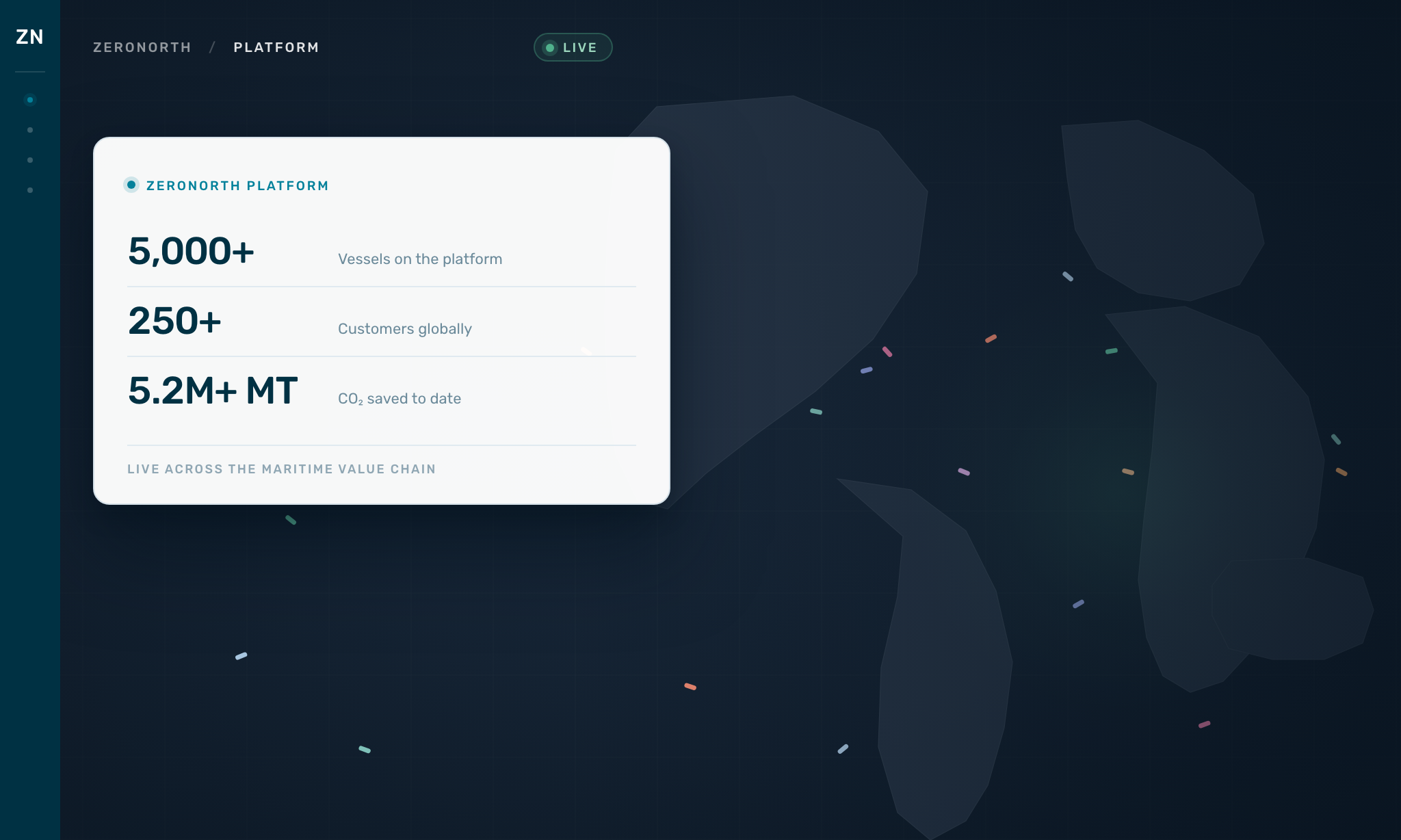
5,000+ vessels
Reporting into one verified stream
1.7+ trillion data points
Collected from onboard sensors and IoT systems
200+ validation checks
Run on every report
Chosen by the world’s leading fleets









Simplifying vessel reporting
Poor data quality and manual reporting create risk, inefficiency, and lost value. This solution delivers accurate, validated, and transparent reporting reducing crew workload while strengthening operational and commercial decision-making.
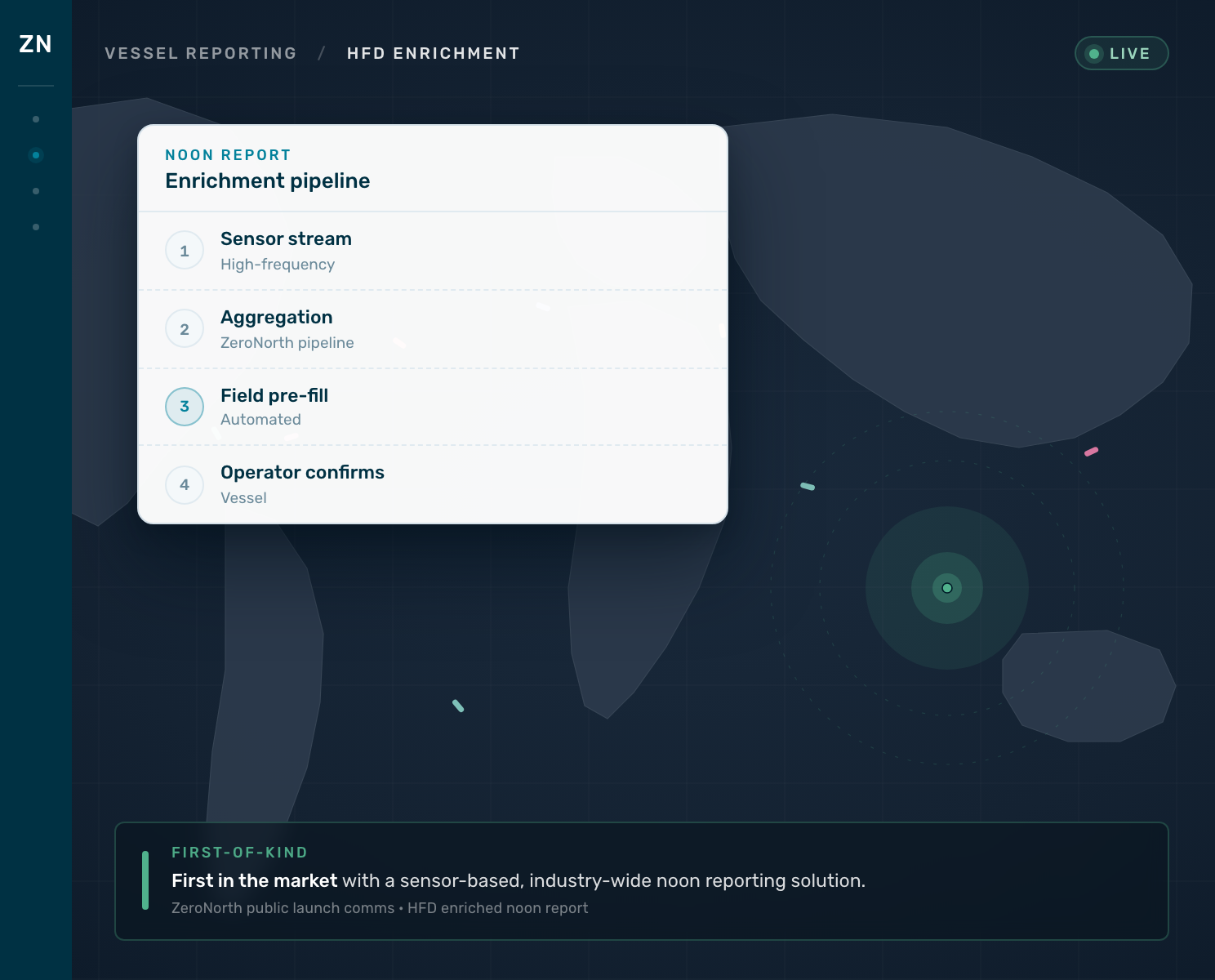
High-frequency data enrichment
Sensor-driven reporting no manual repetition
Key noon report fields are automatically pre-filled using cleaned and aggregated high-frequency sensor data. Templates can be tailored to vessel type, trade and regulatory requirements and manual overwrites are visible to shore teams, ensuring transparency without increasing crew workload.
Offline-first reporting
Built for life at sea
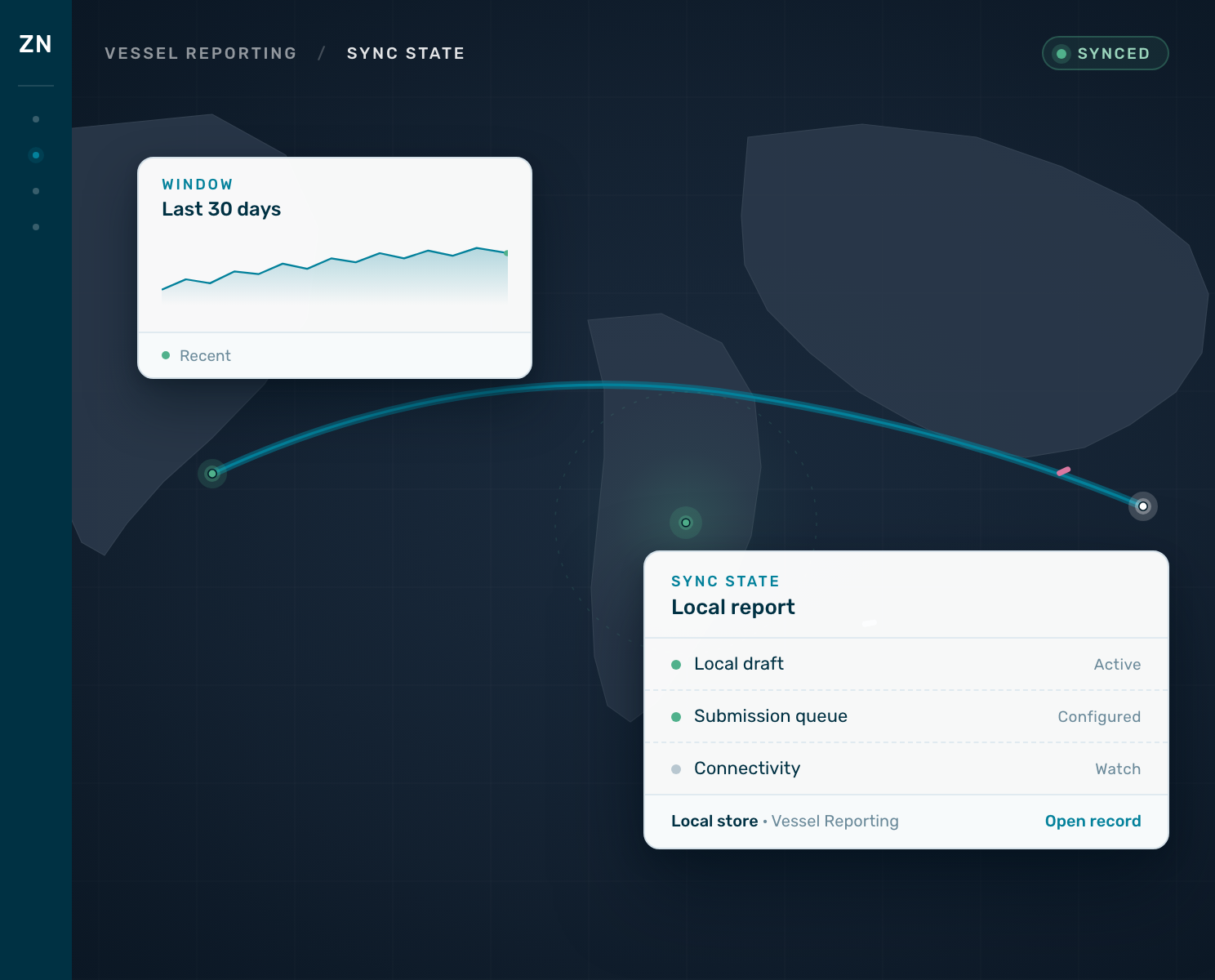
Reports can be completed and stored locally while offline, syncing automatically once connectivity returns. Masters, Chief Engineers and officers can collaborate on the same report across devices with clear roles and no version conflicts. No data gaps. No operational disruption.
How Vessel Reporting works?
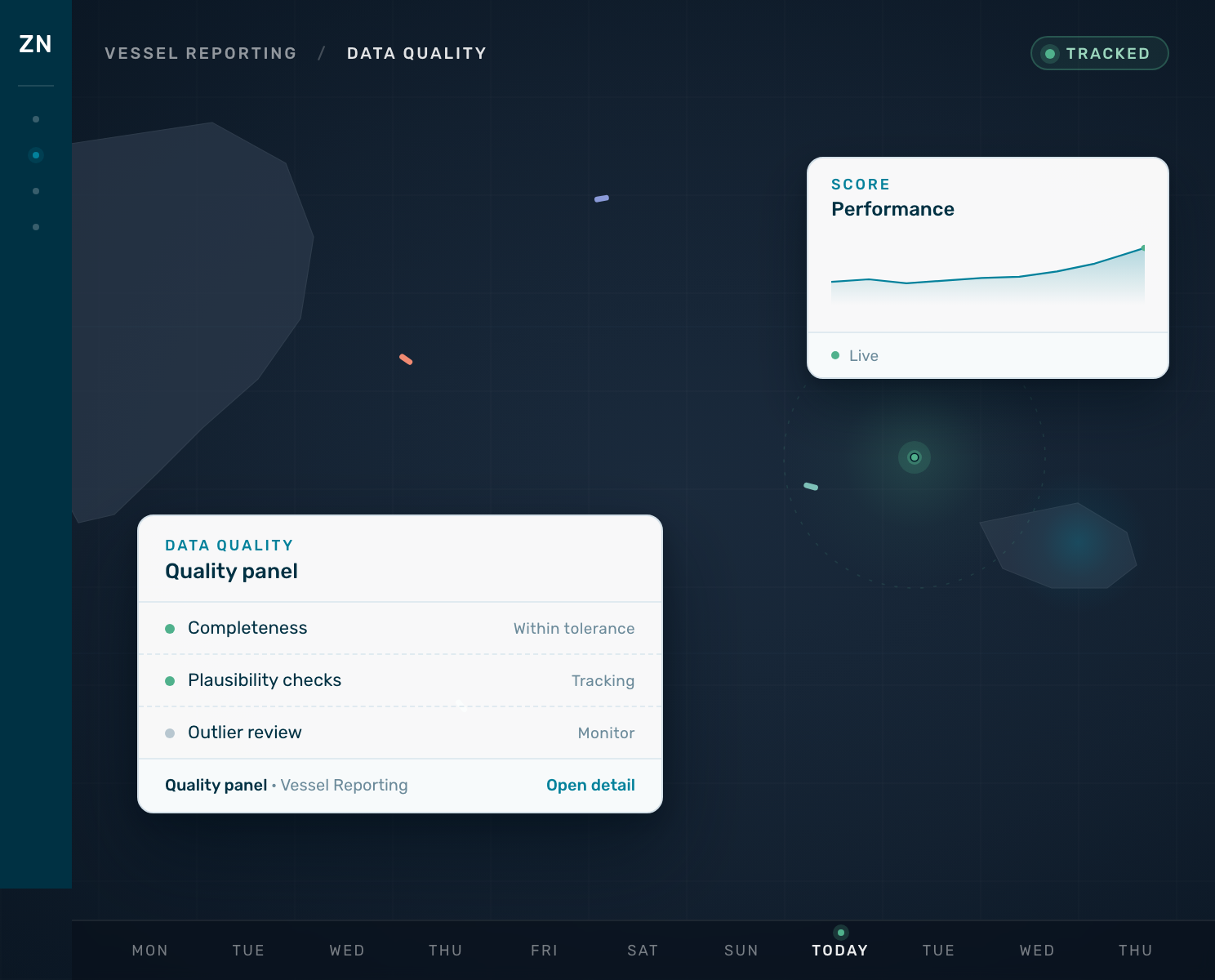
Vessel Reporting captures noon, fuel and emissions data once, validates it at the source and distributes it to every team that needs it — without crews double-handling or shore teams reconciling.

Single-flow capture
crews submit noon, fuel and emissions data once through web or mobile. The platform handles the rest, eliminating the duplicate spreadsheets and parallel logs.

Validation at source
200+ embedded validation checks flag bad data before it leaves the vessel. Errors are caught at the barge or bridge, not in back-office reconciliation weeks later.

One dataset, every team
the same validated reports power emissions filings, performance analysis and commercial decision-making. No reconciliation, no version drift.
Connected across the platform
feeds directly into Emission Analytics, SmartShip and Charter Select. Crews report once; the data lands everywhere it's needed.
200+ validation checks. Trusted by 5,500+ vessels. Aligned to CII, EU ETS, FuelEU and IMO DCS reporting.
Strong differentiator
The ZeroNorth advantage
Intelligence built for real maritime operations at scale
Governance built into every workflow
Vessel Reporting is designed for real operational complexity not ideal conditions. Offline capability, structured collaboration, and embedded validation ensure reliability at sea.
Data you can trust
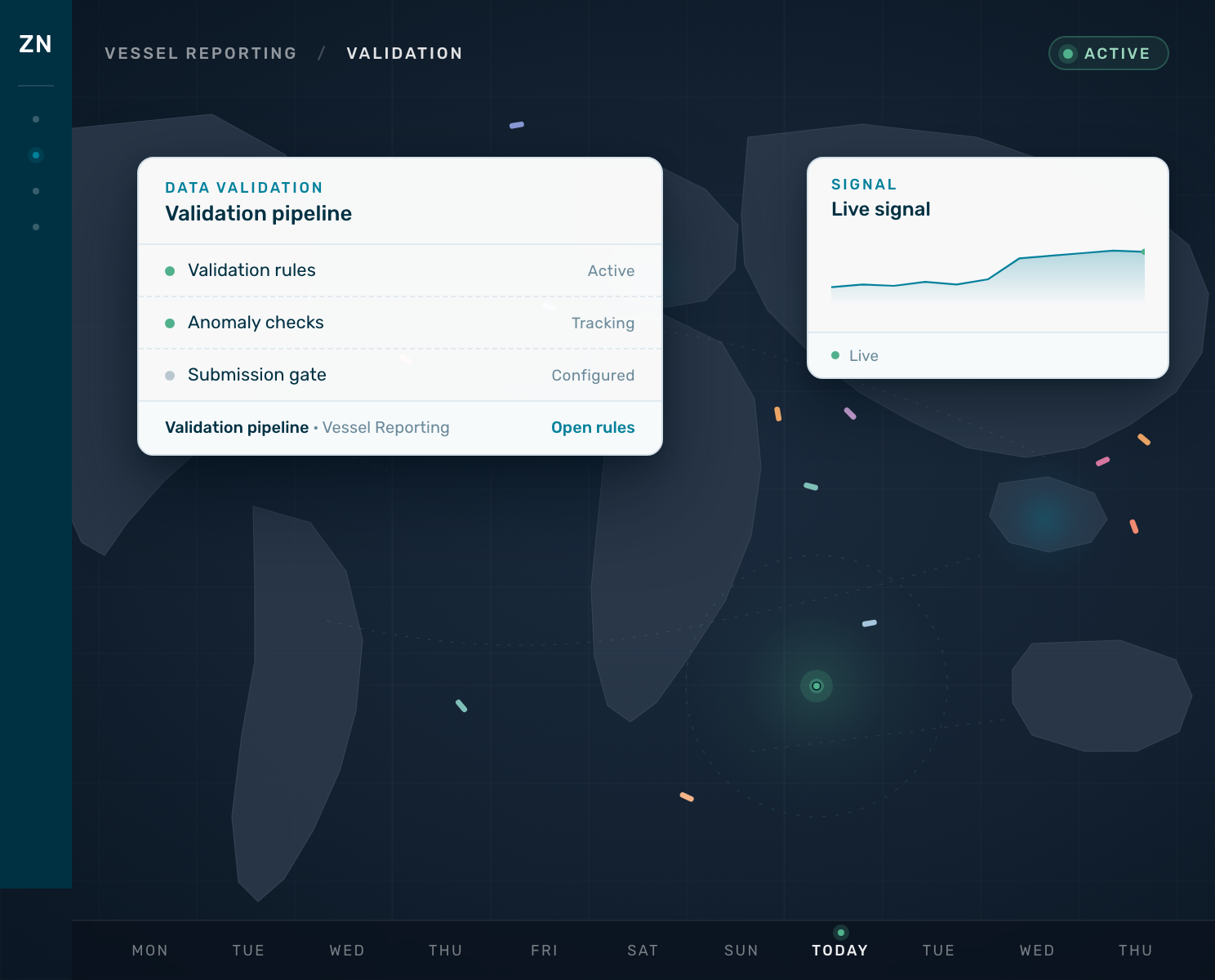
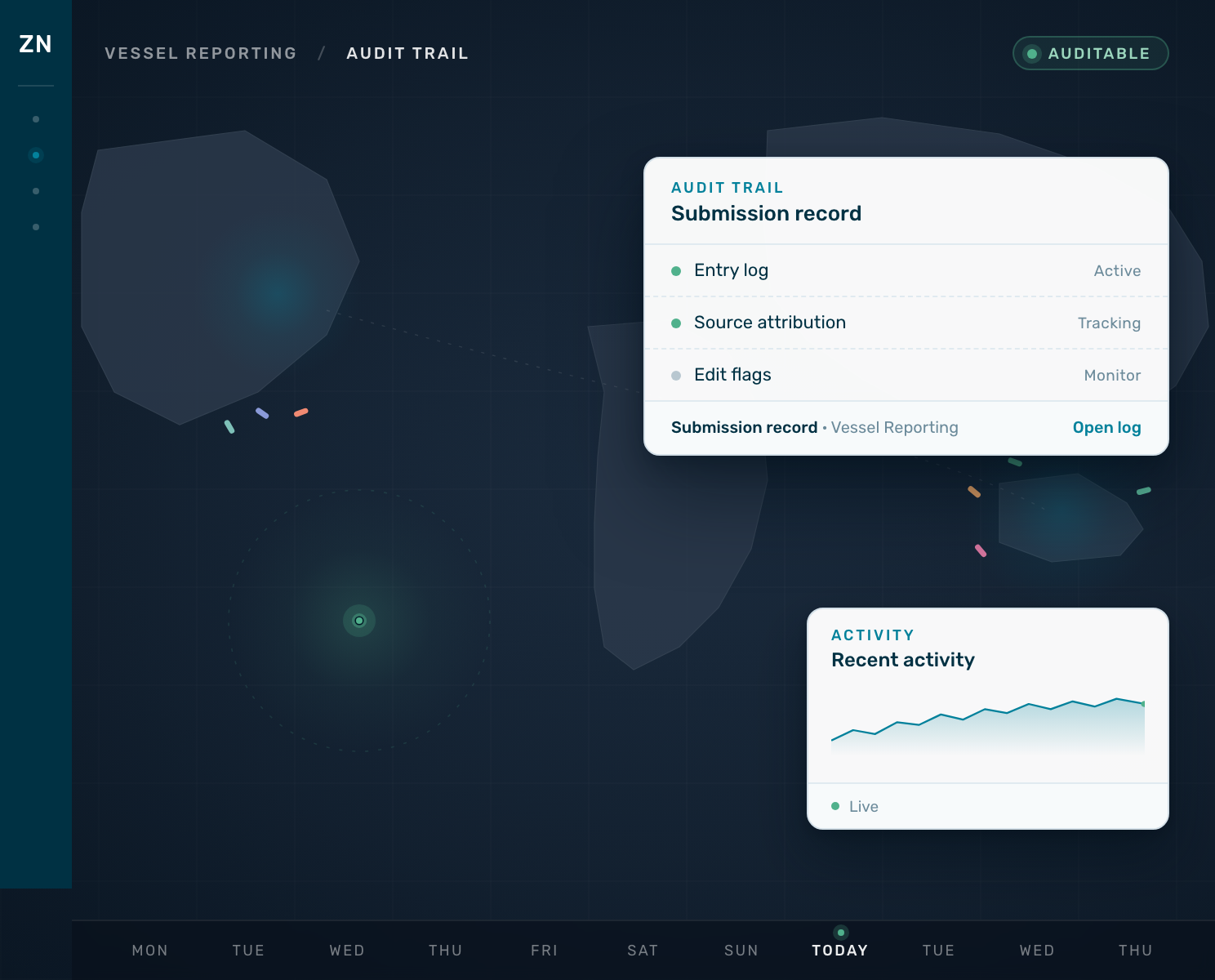
Validation happens onboard, not weeks later onshore. Reported data is consistent, traceable, and audit-ready before it informs compliance or performance decisions.
Built for scale, governed for confidence
From individual vessels to global fleets, reporting standards remain consistent while shore teams retain oversight and control.
FAQ
In case you missed anything
Explore a curated collection of guides, tools, and insights designed to help you get the most out of our products and services.
How is this different from traditional weather routing?
Traditional routing avoids weather.
Voyage Optimisation combines weather, fuel modelling, emissions impact, and safety constraints in every calculation — and continuously updates recommendations as conditions change.
Voyage Optimisation combines weather, fuel modelling, emissions impact, and safety constraints in every calculation — and continuously updates recommendations as conditions change.
How accurate are the fuel predictions?
Fuel models are built on naval architecture principles and enhanced by machine learning and historical vessel data.
Predictions are refined throughout the voyage to minimise deviation.
Predictions are refined throughout the voyage to minimise deviation.
Can we apply safety and restricted area constraints?
Yes.
Operators can define war zones, piracy areas, and company-specific limits. All routes are validated automatically against these constraints.
Operators can define war zones, piracy areas, and company-specific limits. All routes are validated automatically against these constraints.
How does this improve voyage economics?
You can compare route and speed scenarios based on fuel cost, time impact, and emissions before committing.
Even small efficiency gains scale significantly across a fleet.
Even small efficiency gains scale significantly across a fleet.
Does this replace captain decision-making?
No.
Captains retain full control. The system provides data-driven recommendations within defined safety and operational parameters.
Captains retain full control. The system provides data-driven recommendations within defined safety and operational parameters.
How quickly can we get started?
Deployment is designed to fit into existing workflows, with browser-based access and offline capability onboard.
Most teams can begin using the system within a short onboarding period.
Most teams can begin using the system within a short onboarding period.
