The business case for proactive hull maintenance
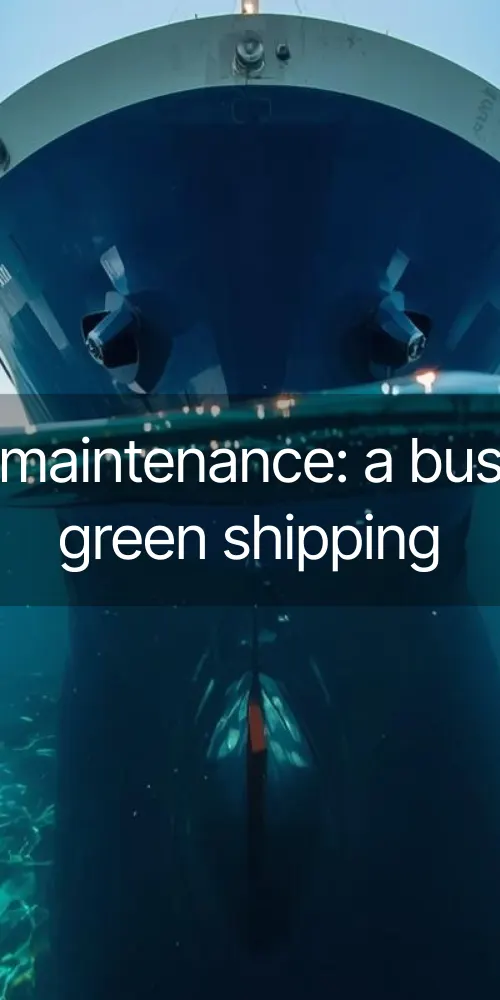
Most vessels don’t lose efficiency overnight. Performance slips gradually, voyage by voyage, until higher fuel bills and poorer CII ratings become impossible to ignore. By then, the cost has already been paid.
Among the many variables influencing a vessel’s performance, hull fouling remains one of the most significant and preventable drivers of fuel waste and carbon emissions. Moving from a reactive to a proactive maintenance strategy is no longer a luxury it is a fundamental pillar of the journey to make global trade green.
The hidden impact of hull fouling
Hull fouling the accumulation of marine growth such as biofilm, algae, and barnacles acts as a silent tax on every voyage. Even a seemingly minor layer of slime can increase hydrodynamic drag, forcing the main engine to work harder and consume more fuel to maintain the same speed.
- The performance gap: Neglecting regular maintenance leads to added consumption, where vessels burn significantly more fuel than their baseline sea-trial models suggest.
- The limitations of visibility: Traditionally, operators waited for visible signs or followed a fixed calendar for cleaning. However, by the time performance drops are visible to the naked eye, the vessel has already incurred significant costs in wasted fuel.
- Regulatory exposure: A fouled hull directly degrades a vessel’s CII rating. In a market where charterers fix vessels based on real performance rather than brochure descriptions, a poor rating becomes a commercial liability.
Shifting from reactive to proactive maintenance
The industry is moving away from break-fix mentalities toward condition-based, proactive maintenance. This shift is enabled by the transition from traditional, fragmented reporting to high-frequency data and trusted insights.
- Beyond noon reports: Traditional reporting often fails to capture real-time changes in hull condition, leading to delayed action.
- Real-time deterioration tracking: Proactive maintenance involves monitoring hull deterioration rates in near real-time, allowing operators to see the exact moment performance begins to slip.
- Maximising uptime: By scheduling cleanings based on actual vessel performance rather than arbitrary dates, companies can reduce unnecessary idle time and coordinate maintenance with port stays.
The financial ROI of a clean hull
To build a successful business case, maintenance must be reframed from a cost centre to a value driver.
- Calculating the ROI: Advanced analytics allow operators to model the exact cost-benefit of a cleaning. This includes factoring in the cost of the dive against the projected fuel savings and reduced allowance purchasing requirements under EU ETS.
- Protecting margins: For charterers and owners, voyage optimisation is about more than just routing; it is about protecting commercial margins in a volatile market.
- Stakeholder alignment: Transparent data creates a single source of truth, aligning technical teams, procurement, and commercial departments on when and why to invest in a cleaning.
How SmartShip enables proactive action
The ZeroNorth platform serves as the technological foundation for this proactive approach, turning complex data into clear, actionable guidance.
- AI-driven insights: Our technology analyses hull performance to build comprehensive business cases for cleaning, providing ROI and confidence scores that explain the logic behind every recommendation.
- High-frequency precision: By integrating high-frequency sensor data, we improve the accuracy of performance models, ensuring that variables like weather, draft, and even hull paint type are accounted for.
- Integrated ship-shore collaboration: The platform ensures that both the Master at sea and the operator onshore see the same real-time picture, allowing for collaborative decisions that balance safety, profit, and planet.
Implementing a proactive programme
Transitioning to a proactive maintenance model requires a structured, forward-thinking approach.
- Define measurable KPIs: Focus on metrics like Specific Fuel Oil Consumption (SFOC) and hull deterioration rates to track progress accurately.
- Unify your data: Break down silos by integrating operational data into a single ecosystem, ensuring information flows seamlessly between ship and shore.
- Start with tangible use cases: Focus on a few vessels to demonstrate the ROI of data-led cleaning before scaling across the entire fleet.
- Adopt a triple win mindset: Ensure every maintenance decision supports profit, people, and the planet.
The path forward
The maritime industry’s future is data-driven. By embracing proactive hull maintenance, operators can move beyond compliance stress and toward strategic control ensuring that every vessel remains efficient, compliant, and commercially competitive in a decarbonising world.
FAQs
How does a clean hull help my business?
A clean hull moves through the water with less resistance. This means you use less fuel to maintain speed, which lowers your costs and protects your profit. It also helps you stay competitive because charterers prefer vessels that perform efficiently and meet their sustainability goals.
How do you know when it is the right time to clean?
Instead of guessing or waiting for a set date, ZeroNorth uses data from the ship to track its performance in real-time. Our technology filters out things like bad weather so we can see exactly how much extra fuel the hull is causing the ship to burn. This tells you the perfect moment to clean for the best return on your investment.
What does hull maintenance have to do with new regulations?
Regulations like the EU ETS and CII are based on how much carbon your ship emits. Because a dirty hull makes the engine work harder, it creates more emissions. Keeping the hull clean is one of the easiest ways to lower your carbon costs and keep your vessel's rating high.
Can the platform tell the difference between hull issues and engine problems?
Yes. The platform is smart enough to see if a drop in performance is being caused by growth on the hull or by something inside the engine room, like an inefficient generator. This ensures you only spend money on a hull cleaning when it is actually needed, saving you from unnecessary maintenance costs.
Does the system account for the specific paint on my ship?
We know every ship is different. The ZeroNorth platform includes details about your specific hull paint and how it was applied. By combining this with data on where the ship has been sailing and how long it has spent in port, we provide a tailored plan that fits your specific fleet.